Guest Chef: Skye Gyngell

Rich  Pickings

From the earthy base tones of sage, rosemary and bay to the pure, singing top notes of mint and basil, fresh herbs are key to harmonious cooking says Skye Gyngell, renowned head chef at the beautiful Petersham Nurseries Cafe. Celebrate herbs’ abundance, colour and vibrancy with dishes such as fillet of beef with salsa verde, and mint ice cream, then sit back and enjoy the well-earned plaudits from your guests.

I like to cook uncomplicated food, low on technique but with maximum flavour and vibrancy. I want to create strong, clean tastes, but there should also be subtle nuances - hints of other things. The art of balancing flavours takes a little practice - I am learning all the time – but a really good place to start is with the use of fresh herbs.

Nowadays I can’t imagine cooking without fresh herbs any more than I could contemplate cooking out of season. At Petersham Nurseries, the garden centre and café where I’m head chef, we have a modest vegetable garden, not more than a third of an acre, but I love it and it has the strongest influence over how I cook. It’s full of herbs: everything from sage, lemon balm, thyme and lovage to rocket, rosemary, coriander, tarragon, chives and basil. Every summer morning I sit in this garden writing the day’s menu, and think about how I can use the herbs in my cooking.

First there are herbs such as rosemary, sage, thyme, bay and parsley that stand up well to slow, long cooking. Rosemary grows in our garden all year round – its woody flavour is essentially wintry in feel. I like to use it in slow-cooked lamb or pork dishes. It is also a herb that works strangely well in a sweet context. In winter I bruise the branches, warm them in honey and spoon this over pinwheels of blood oranges. And it’s lovely in a lip-smackingly tart lemon sorbet.

Balancing flavours takes a little practice, but a really good place to start is with the use of fresh herbs

Thyme is an essential ingredient in a bouquet garni, along with parsley and bay. These three herbs form the foundations for making stocks, slow-cooked dishes and soups. Thyme’s gentle yet assertive flavour is vital in cooking: its warmth and depth underpin dishes and give them real substance.

Sage is another herb that can withstand longer cooking. It works beautifully with scallops, truffles, slow-cooked pork, potatoes and pulses such as borlotti or cannellini beans. Rosemary, thyme and sage (all herbs that can stand up to heat for a good while) should be added at the start of cooking along with onions, garlic, dried chillies and spices.

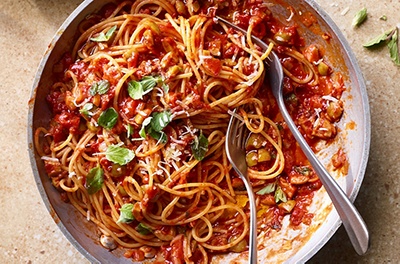
Soft herbs such as basil, coriander and mint, on the other hand, should be used at the end. Their job is to add a final lightness, like the clear, pure notes at the top end of the scale. Of these, there is probably no herb whose scent is more seductive to me than basil. Vibrant, aromatic and clean – its flavour is nonetheless delicate and suffers under high temperatures or prolonged cooking. It works best uncooked – simply paired with ripe tomatoes or in sauces such as pesto, Argentinian chimichurri or a bright, strong salsa verde.

I was soon devoured by a passion for the subject. In fact, I found I had a natural ability that had been lying dormant. Better still, I found myself at peace when cooking. And guess what? Suddenly, I was known as a motke kok – a local expression for a great cook. Those who had once pitied my husband started phoning me for advice. I got my own radio show and TV followed: I was in demand.

Vibrant, aromatic and clean, there is no herb whose scent is more seductive to me than basil

Mint’s cool freshness works equally well with sweet or savoury dishes. It’s as bright and lovely in a simple salad as it is with drinks such as homemade lemon or elderflower cordial, or in a light ice cream.

A few herbs fall into both categories. Parsley – my favourite herb – is one, and I use both the flat-leaf and curly varieties constantly. The stalks are integral to a bouquet garni, and I love to use the milder, curly parsley chopped as finely as possible to finish dishes; lightly sprinkled, it gives dishes an instant elegance.

As cultures separated, Cape Malay dishes went underground but now our food heritage is slowly re-emerging. And I like to travel and tell our story through food. Take my waterblommetjie soup. At its heart is a pond weed from the Western Cape that was eaten by South African bushmen. I make it with coconut milk to show our Indonesian slave heritage and spice it with horseradish to exemplify the English occupation. If only all history lessons could be so tasty!

Tarragon is another herb useful in both slow cooking and in finishing a dish. The roots and stalks of coriander also add vigour to dishes and withstand longer cooking times, although their leaves lose their character as soon as they are exposed to high heat.

However you use them, try to cook with fresh herbs. Dry herbs can taste musty and lack the vivid colours and scents that make their fresh counterparts such a sensual joy.

Skye Gyngell is head chef at Petersham Nurseries Cafe, off Petersham Road, Richmond, Surrey. Tel 020 8605 3627; www.petershamnurseries.com

Profile

  • Born in Sydney in 1963, the daughter of Australian TV mogul Bruce Gyngell. Goes to Sydney University in 1979 to read law.
  • In the university holidays, works as a kitchen porter at Sydney restaurant The Store, where she learns basic culinary techniques. Decides to change the focus of her studies, travel and concentrate on cooking.
  • Travels to France in 1980 to study at La Varenne, a catering school in Paris. On leaving, works for a year at Dodin-Bouffant, a two-star Michelin restaurant.
  • Moves to London in 1982 to work under Anton Mosimann at The Dorchester. Follows this with stints at other restaurants including The French House.
  • Moves back to Sydney for a year to work with chef Mark Armstrong at Pegrums.
  • After having her first daughter Holly in 1990, begins catering for high-profile private clients including Mario Testino and Madonna. Meets Gael and Francesco Boglione.
  • In 2002 the Bogliones purchase a dilapidated nursery at the bottom of their Richmond garden – Petersham Nurseries – and ask her to run a teashop there. Cooks there at weekends in a shed with a four-burner stove.
  • The Petersham Nurseries Cafe grows in popularity, opening six days a week; a professional kitchen is built.
  • Her first book A Year in My Kitchen (Quadrille) is published in 2006.
  • Now lives in Shepherd’s Bush with her partner James Henderson and two girls, Holly (17) and Evie (ten) and writes on food for Vogue (UK) and The Independent on Sunday.

This article is from Waitrose Food Illustrated:
Issue August 2007


Sitemap


Contact us | Security and privacy | Jobs | Corporate | Our company | Accessibility